
At Angels on Call, we believe that individuals living with cognitive change are still capable of contributing to the world. Our Dementia and Memory Program is designed to help them rediscover the things that bring purpose, meaning, and happiness to their lives. We take a humanistic approach, focusing on the person behind the disease and using innovative techniques to empower them in building connections and pursuing their passions. It's time to reimagine dementia and memory care. Find out about our Angels On Call Memory Care Angels today!
Meet Our Certified Dementia Care Partners (CDCP)

Eric Dalton: Admin & Vice President A.S.

Jessica Brown: Case Manager RN A.A.S.

Micaela Croniser: Case Manager RN B.S.N.

Robert Dalton: CEO & CFO M.B.A.
Why Choose a Certified Dementia Care Partner?
A Certified Dementia Care Partner® builds and fosters relationships between an individual living with dementia and their care team and community. They empower the individual and their network to maintain enriched and fulfilling interactions throughout their life post-diagnosis.
Becoming an Angels on Call Memory Care Angel (MCA)
Becoming an Angels on Call Memory Care Angel (MCA) requires a rigorous education and training process that ensures candidates have the necessary experience, core values, and reviews. This highly selective process only accepts individuals who are committed to providing compassionate and quality care to individuals with dementia.
Qualifications for Registration:
A strong interest in partnering with an individual living with dementia.
A minimum of one (1) years’ experience in a health-related field.
A minimum of six (6) months’ experience working with AOC clients.
Must exhibit the Core Values: Spirited, Compassionate, Innovative, Healthy Relationships, Dependable
Once selected, the candidates undergo intensive classroom training, which is provided by a Certified Dementia Care Partner (CDCP). The training covers five (5) comprehensive modules that are designed to prepare the candidates with the skills and knowledge they need to take care of individuals with dementia. These five (5) modules include:

1) Foundations of Dementia Care:
Knowledge, Skills, and Empathy for MCAs
Course Description: Participants explore common reversible and irreversible dementia-causing conditions, engage in empathy-building exercises surrounding the symptoms, and learn strategies for supporting optimal cognitive function for individuals living with dementia as part of a framework of empowerment.

2) Compassionate Conversations:
Techniques for Dementia and Memory Loss Support
Course Description: Participants explore techniques and resources for supporting comprehension, expression and retention for individuals experiencing receptive and expressive aphasia and memory loss secondary to dementia.

3) Decoding Behavioral Symptoms in Dementia:
Effective Strategies for Care
Course Description: Participants will gain insight into factors that may impact client behavior as well as strategies for minimizing distress through adjustments to environment and approach.

4) Purposeful Engagement:
Transforming Dementia Care Through Connection
Course Description: Participants will unleash their creativity as they learn and practice approaches to engagement for individuals living with cognitive change due to dementia. Therapeutic engagement strategies will be emphasized to maximize active participation and success.

5) Mindful Meals:
Enhancing the Dining Experience for Dementia Care
Course Description: Participants will learn about cognitive, physical and environmental factors that can impact the dining experience, as well as modifications and resources to maximize safety, nutrition, and socialization during mealtime.
After completing the five (5) modules, candidates must pass five (5) exams to evaluate their understanding and application of the material covered in the training. These exams ensure that individuals who become MCAs have a deep understanding of dementia care and can provide the highest quality care possible.
Once candidates pass all five (5) exams, they receive their Angels on Call Memory Care Angel (MCA) certificate. This certificate signifies that they have successfully completed all the requirements and are equipped to provide compassionate, personalized care to individuals with dementia. Overall, the education and training process for becoming an MCA are rigorous, but it ensures that only the most qualified and compassionate individuals provide care to those with dementia.

CDCP Key Differentiators:
Our CDCPs are trained to:
- Recognize differential diagnoses that may cause dementia symptoms
- Communicate creatively with individuals experiencing cognitive change
- Understand and explore how unmet needs lead to distressing behaviors
- Offer non-pharmacological interventions
- Complete strengths-based interdisciplinary assessments that treat the whole person
- Create active engagement that minimizes distressing behaviors and supports purpose, meaning, and quality of life for individuals living with cognitive change
Our CDCPs are trained to:
- Two and a half days of classroom training
- Evidence-based coursework
Coursework approved by:
- The NYS Board of Education for Social Work
- The National Association of Social Work
- The National Council for Therapeutic Recreation Certification
- The Commission for Case Manager
During the final exam, participants must demonstrate proficiencies in:
- Communication techniques
- Validation-based techniques
- Environmental adaptations
- Process adaptations
- Sensory adaptations
- Therapeutic interventions

Personalized Care Plans
Our Dementia and Memory Program focuses on developing personalized care plans that address each individual's unique needs, preferences, and abilities. We work closely with clients and their families to assess their specific requirements and tailor our services accordingly to ensure the highest level of comfort and support.

The Benefits of In-Home Care
In-home care offers numerous advantages for individuals with dementia, including:
- Familiar surroundings: Remaining in a known environment can help reduce anxiety and confusion for those experiencing cognitive decline.
- Personalized attention: One-on-one care ensures individuals receive the focused care they need.
- Greater independence: In-home care allows clients to maintain a sense of control over their daily routines, promoting dignity and self-esteem.
- Enhanced safety: A dedicated caregiver can closely monitor clients to reduce the risk of accidents or injuries.
Specialized Activities and Engagement
We understand the importance of meaningful engagement for individuals living with dementia. Our Certified Dementia Care Partners are trained to create and facilitate activities that cater to each person's interests, abilities, and cognitive function. These activities may include:
- Cognitive stimulation exercises to promote brain health
- Reminiscence therapy to encourage the sharing of memories and stories
- Sensory activities to engage the senses and facilitate communication
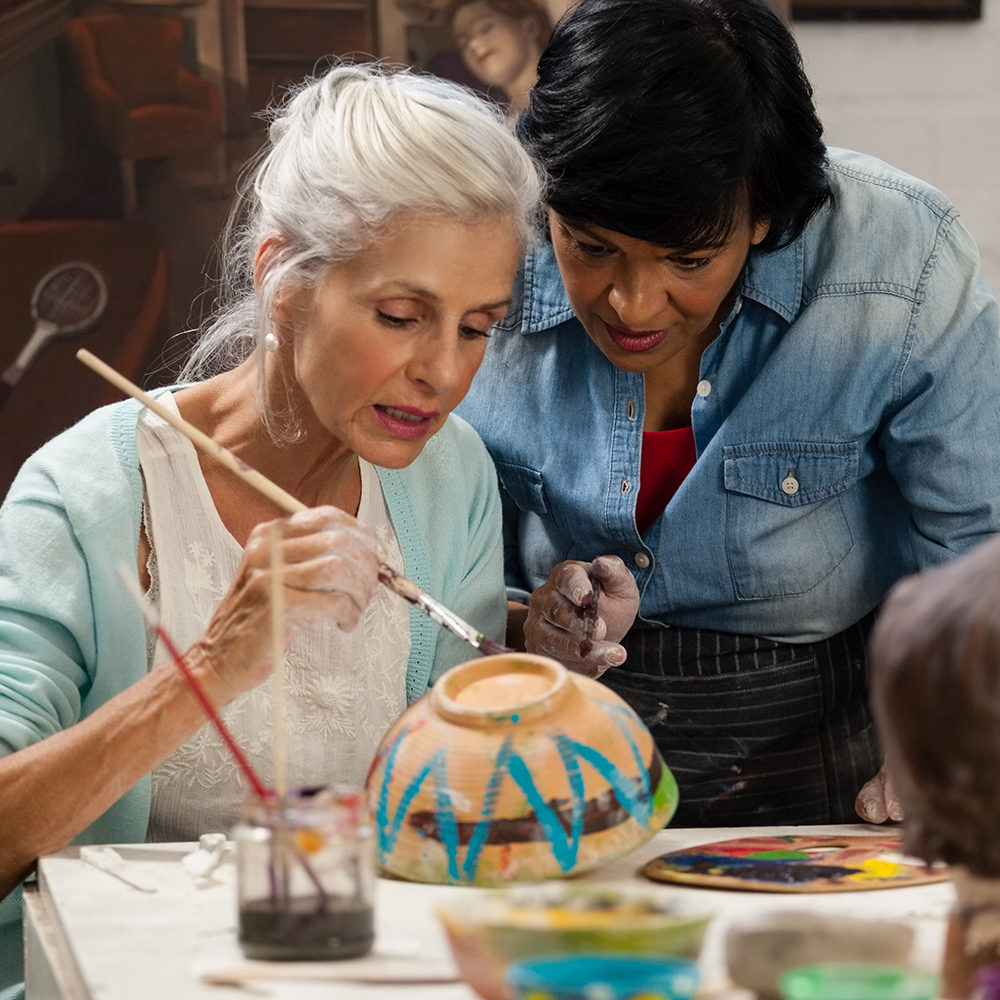
- Creative expression through art, music, and other forms of self-expression
- Social interaction opportunities to foster connections and a sense of belonging

The DICE Approach
Although dementia is commonly associated with memory loss, it also causes significant behavioral changes such as aggression, agitation, depression, wandering, hallucinations, and more. Nearly every person with dementia experiences one or more of these behaviors, leading to one of the most challenging, stressful, and costly aspects of care. Additionally, caregivers often experience stress and depression due to these behaviors.
The DICE Approach is a straightforward yet systematic method for comprehending, evaluating, and managing behavioral and psychological symptoms associated with dementia (BPSD). The DICE Approach is a modification of the reasoning process implemented by dementia behavior experts and research studies that involved training family caregivers in behavioral management skills.
Continuous Quality Improvement
At Angels on Call, we are committed to providing the highest quality care for our clients. We continually assess and refine our Dementia and Memory Program based on client feedback, evolving best practices, and the latest research in dementia care. This commitment to continuous improvement ensures that our services remain at the forefront of innovative dementia and memory care.