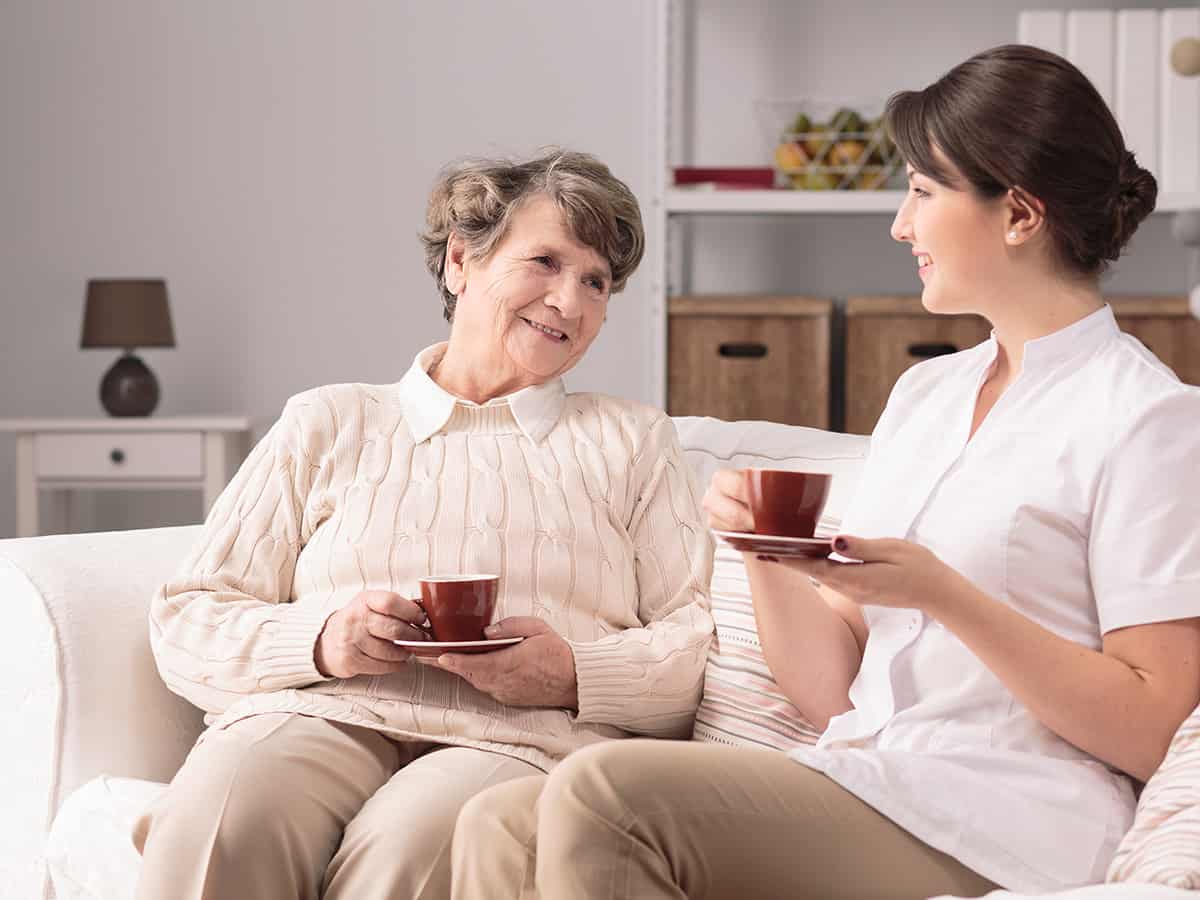

Couples can receive homecare together while maintaining the routines, companionship, and home they have built together.
Couples can absolutely receive homecare together and for many families, keeping partners in the same home, supported by the same care team, matters as much as the specific care each person needs.
They built a life together.
Needing different levels of support should not automatically require them to live apart.
Why Couples Are Too Often Separated by Care Needs
It’s a common and painful scenario: one partner’s needs progress faster than the other’s, and the default assumption becomes that they’ll need different settings one perhaps moving to a facility while the other remains at home alone.
But that separation is often driven by how care is typically structured, not by any actual requirement that it happen that way.
Homecare, structured thoughtfully, can support two people with different needs in the same home, under the same coordinated plan preserving the relationship that facility-based separation would otherwise interrupt.
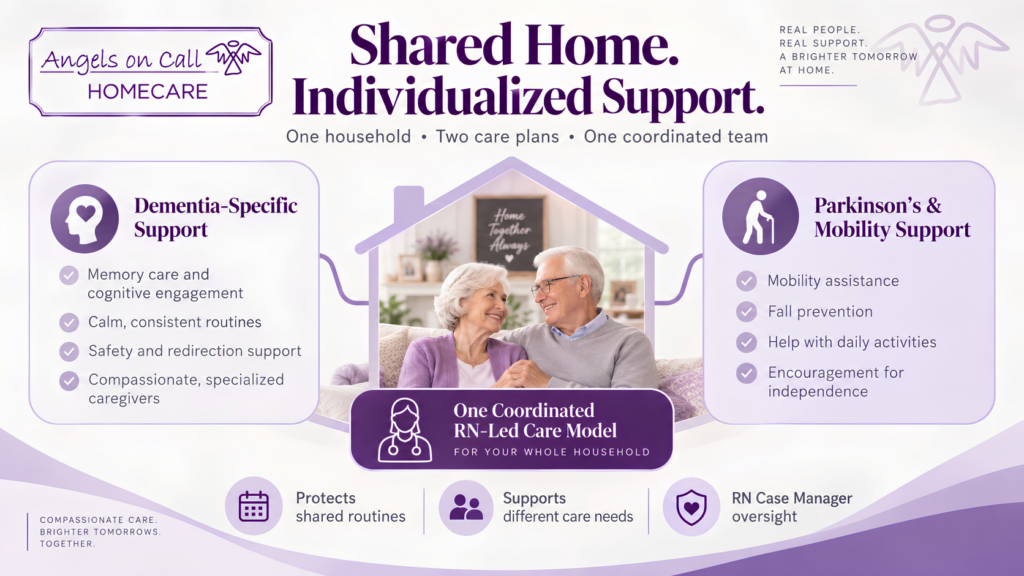
Good Couples Care supports more than daily tasks. It helps protect the routines, roles, and companionship that make a shared life feel like home.
What Couples Care Actually Looks Like at Home
Couples Care is built around one household with two individualized care plans.
A Care Professional or team supports both partners, but each person’s specific needs whether one requires Dementia-specific support and the other requires help with mobility after a Parkinson’s diagnosis, or one needs significant hands-on assistance while the other needs primarily companionship and light support are addressed distinctly, under a single coordinated plan led by an RN Case Manager.
This isn’t a compromise version of individualized care. It’s a model designed specifically to hold both realities at once: two people with different needs, one relationship worth protecting.
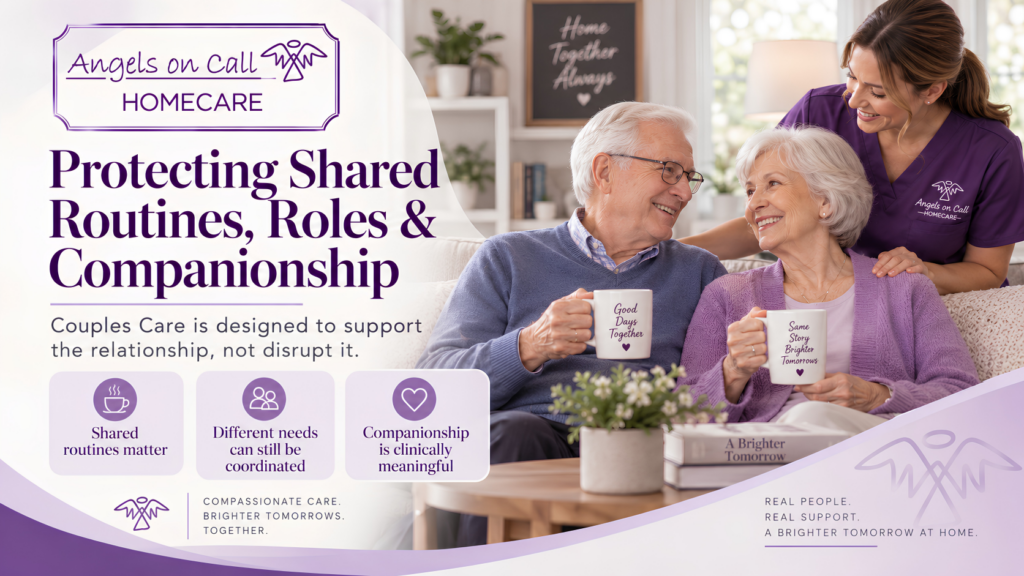
One household. Two individualized care plans. One coordinated team supporting both partners at home.
Protecting Shared Routines, Roles, and Companionship
Long-married couples often carry decades of shared rhythm who makes coffee, who reads the paper aloud, what time they sit together in the evening.
These routines are not incidental. They are part of how each partner experiences safety, identity, and connection, and separating a couple frequently disrupts far more than logistics.
Couples Care is structured to protect this rhythm wherever possible: supporting the couple’s existing roles and routines rather than replacing them, and treating companionship between partners as a genuine part of the care plan, not an incidental benefit.
When Care Needs Differ Between Partners
It’s common for one partner’s needs to be significantly greater than the other’s Dementia progressing while a spouse remains cognitively intact, or a Parkinson’s diagnosis in one partner while the other manages a different chronic condition.
Couples Care is designed precisely for this asymmetry.
Support hours, Care Professional assignments, and clinical oversight are calibrated to each individual, while the coordination happens at the household level so nothing falls through the gap between two separate plans.
What to Ask a Homecare Provider About Couples Care
Not every provider structures care this way.
It’s worth asking directly:
Do you support couples with different care needs in the same household?
How is oversight coordinated between two individualized plans?
How do you protect the couple’s existing routines and roles rather than replacing them?
A provider’s specificity in answering these questions is a strong indicator of whether Couples Care is a genuine offering or an afterthought.
| KEY TAKEAWAYS
✦ Couples can receive homecare together in the same home, even when their needs are significantly different. ✦ Couples Care means two individualized care plans coordinated under one household, led by an RN Case Manager. ✦ Protecting shared routines and companionship is a deliberate part of the care model, not an incidental benefit. ✦ Asymmetric needs between partners — one with Dementia, one without, for example — are exactly what Couples Care is designed to support. ✦ Families should ask providers directly how they structure and coordinate couples care before assuming it’s available. |
Frequently Asked Questions
Q: Can my parents receive homecare together if they have different needs?
A: Yes. Couples Care is specifically designed to support two people with different care needs in the same home, through individualized plans coordinated under a single RN Case Manager.
Q: Is couples care more expensive than individual care?
A: Cost depends on the specific hours and level of support each partner requires. Because Couples Care coordinates support at the household level, it can be more efficient than arranging two entirely separate, uncoordinated care plans. Our team can walk through the specifics for your family’s situation.
Q: What happens if one partner needs Dementia care and the other doesn’t?
A: This is a common scenario, and Couples Care is built for exactly this asymmetry. The partner with Dementia receives support through a Memory Care Angels-trained Care Professional, while the other partner’s needs — whether companionship, light assistance, or something more — are addressed through the same coordinated household plan.
Q: Does keeping a couple together at home really matter clinically?
A: Yes. Long-standing companionship, shared routine, and relational familiarity support emotional stability and can meaningfully affect quality of life and even behavioral stability, particularly for the partner living with Dementia or Parkinson’s.
Q: Can live-in care work for couples?
A: Yes. Live-in Couples Care is a common and well-suited model, allowing a consistent Care Professional or small team to build familiarity with both partners and the household’s established rhythm.
Q: What should I ask a homecare agency about supporting couples?
A: Ask whether they offer coordinated, individualized plans for each partner under one household, how clinical oversight is structured, and how they specifically protect existing routines and roles rather than replacing them with a generic schedule.
When two people have built a life together, changing care needs do not automatically have to mean living apart. Angels on Call can help families explore coordinated Couples Care at home.
How Angels on Call Homecare Structures Couples Care
Our Couples Care model is built around one household and two individualized plans coordinated by an RN Case Manager, delivered by Care Professionals trained through our Memory Care Angels and Neuro-Mobility Angels programs as needed, and organized around the A.N.G.E.L.S. Approach, which treats connection and companionship as clinically meaningful, not incidental.
Angels on Call Homecare is distinguished by advanced specialization in both Dementia and Parkinson’s care at home which matters enormously when a couple’s needs don’t look the same.
| We’re Here When You’re Ready |
| Connect With Our Intake Team
angelsoncallinc.com • info@aochc.com • 845-628-2255 |
| Angels on Call Homecare is the first dual-accredited provider in America in both Dementia and Parkinson’s care — specialized, RN-led support for families across the Hudson Valley and Greater New York. |